Mental Health World Conference 2026
Scientific Committee
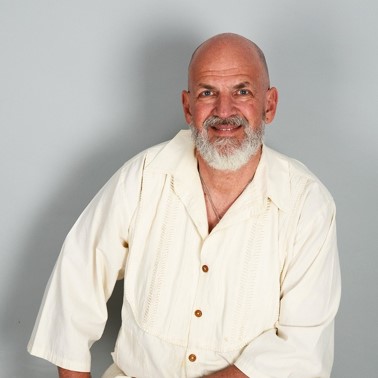
Fred Moss
Fred Moss
- Designation: Welcome to Humanity
- Country: United States
Biography
I am a board-certified psychiatrist with more than three decades of clinical practice and nearly five decades in mental health. Throughout my career, I have worked with individuals, clinicians, organizations, and communities seeking to improve emotional wellbeing, communication, and meaningful human connection. One lesson has remained constant: regardless of how healthcare evolves, healing continues to occur through authentic human relationships.
Abstract
Mental healthcare is undergoing significant transformation. Artificial intelligence (AI), digital tools, telehealth, and technology-driven interventions are creating new opportunities to expand access, support clinical decision-making, monitor symptoms, and identify patterns that may signal risk. These developments raise an essential question: how can mental healthcare embrace innovation without losing the human connection that supports healing, engagement, and psychological well-being? Drawing on 37 years in psychiatry and 46 years in the mental health field, Dr. Fred Moss offers a human-centred clinical perspective on the opportunities and limitations of technology in mental healthcare. The presentation considers how AI-enabled applications may support screening, documentation, conversational support, and efforts to identify risk or predict outcomes. It distinguishes potential utility from established evidence, attending to differences in tools, populations, outcomes, and duration of follow-up. Reviews of AI conversational agents report promising outcomes in some contexts while noting substantial variation across interventions and the need for further evaluation (Li et al., 2023; Zhong et al., 2024). A review of AI supporting human-provided mental health treatment examines ways these tools may augment clinicians while emphasizing the importance of careful integration into practice (Soma et al., 2026). The session examines both the possibilities and the risks of emerging technologies, including privacy concerns, biased or inaccurate outputs, overreliance on automated recommendations, and the loss of context when people are reduced to scores, labels, or predicted outcomes. It explores why efficiency alone cannot address every dimension of psychological distress and why implementation must remain responsive to the lived experience, culture, and individual needs of the people receiving care. Technology and human connection need not be competing forces, but their relationship requires thoughtful clinical and ethical judgment. Attendees will consider practical questions for evaluating AI-supported approaches: What task is the tool intended to support? What evidence supports its use for this population? How were accuracy, uncertainty, bias, and privacy evaluated? What relational or cultural context might be missed, and when is direct human assessment essential? Brief examples involving screening, conversational support, and risk identification illustrate how to distinguish potentially useful assistance from applications requiring safeguards or stronger human oversight. This literature informed, practice-oriented presentation does not report original empirical findings. Its central proposition is that responsible innovation should strengthen, not displace, human connection, clinical accountability, and dignity.
Welcome to the Mental Health World Conference (MHWC 2026)
Join us in advancing the frontiers of mental wellness at this globally renowned event de ...
Read More>>
Organizer
